Bar CodeX
Everything Is at Stake
"A throw of the dice will never abolish chance."— Stéphane Mallarmé
The Game and Its Reversals in the Artistic Practice of Wen New Atelier (Kalen Iwamoto and Julien Silvano)
Play has occupied a fundamental place throughout the history of art and literature. It constitutes a mode of creation grounded in chance, constraint, experimentation, and the displacement of forms. At the end of the nineteenth century, Stéphane Mallarmé opened a new path with Un coup de dés jamais n'abolira le hasard (A Throw of the Dice Will Never Abolish Chance). Typography, the use of blank spaces, and the rhythm of the page became integral elements of the poem itself. Reading was no longer a linear experience. Meaning emerged through pathways, connections, and associations.
At the beginning of the twentieth century, this reflection was extended notably through the Dada movement and Surrealism. Marcel Duchamp transformed play and strategy into tools of thought. His practice of chess accompanied a body of work that questioned rules, systems, and artistic conventions. The Surrealists, in turn, explored the creative potential of play through automatic writing and the exquisite corpse. These experiments opened the artwork to unpredictability and collective creation, while redefining the role of the author.
In the early 1960s, Fluxus continued this lineage by making protocols, instructions, and participation the very materials of the artwork. Everyday gestures acquired an aesthetic dimension. Experience took precedence over the object, while play created a space where perception, language, and action could be reinvented together.
The Ouvroir de littérature potentielle (Oulipo), founded in 1960 by Raymond Queneau and François Le Lionnais, made constraint the very engine of invention. Writing rules, often borrowed from mathematics or logic, opened up an almost infinite field of possibilities. They shifted attention away from inspiration and toward the process of creation itself. Georges Perec offered one of its most remarkable demonstrations. In La Disparition (A Void), written without the letter "e," the constraint goes far beyond a literary exercise. Absence becomes a principle of composition that profoundly transforms the narrative and gives a new presence to what is missing.
This reflection finds a direct continuation in Disparition by Wen New Atelier. The work takes the form of a keyboard whose "E" key — the most frequently used letter in the French language — has disappeared. By removing a sign that is almost invisible precisely because of its everyday presence, Kalen Iwamoto and Julien Silvano make perceptible what usually escapes our attention. Like Perec's work, absence becomes a revealer: it exposes the structures of language and invites us to reconsider our habitual ways of writing.
It is within this lineage that Wen New Atelier's practice unfolds. Since 2022, Kalen Iwamoto and Julien Silvano have explored language as a living material. Words circulate, disappear, and are recomposed. Images shift their function. Protocols become creative tools. Play occupies a central position within this research. It establishes the conditions for an experience in which each participant is invited to act. Yet what is at stake extends far beyond the realm of play itself.
Their works observe a society in which texts and images are produced, circulated, and consumed at unprecedented speed. They reveal how digital interfaces organize our attention and transform our relationship to language. But they also create spaces of encounter. In Couple Machine, one of the duo's emblematic works, French and English — the native languages of Julien Silvano and Kalen Iwamoto — respond to one another, intersect, deform, and translate themselves without ever fully merging.
The work does not seek to erase the differences between languages. Instead, it preserves them. The gaps become spaces of listening; misunderstandings become sites of creation, where meaning emerges not through sameness but through otherness. Between connection and rupture, Wen New Atelier's practice reminds us that relationships are not born from the disappearance of differences, but from their dialogue.
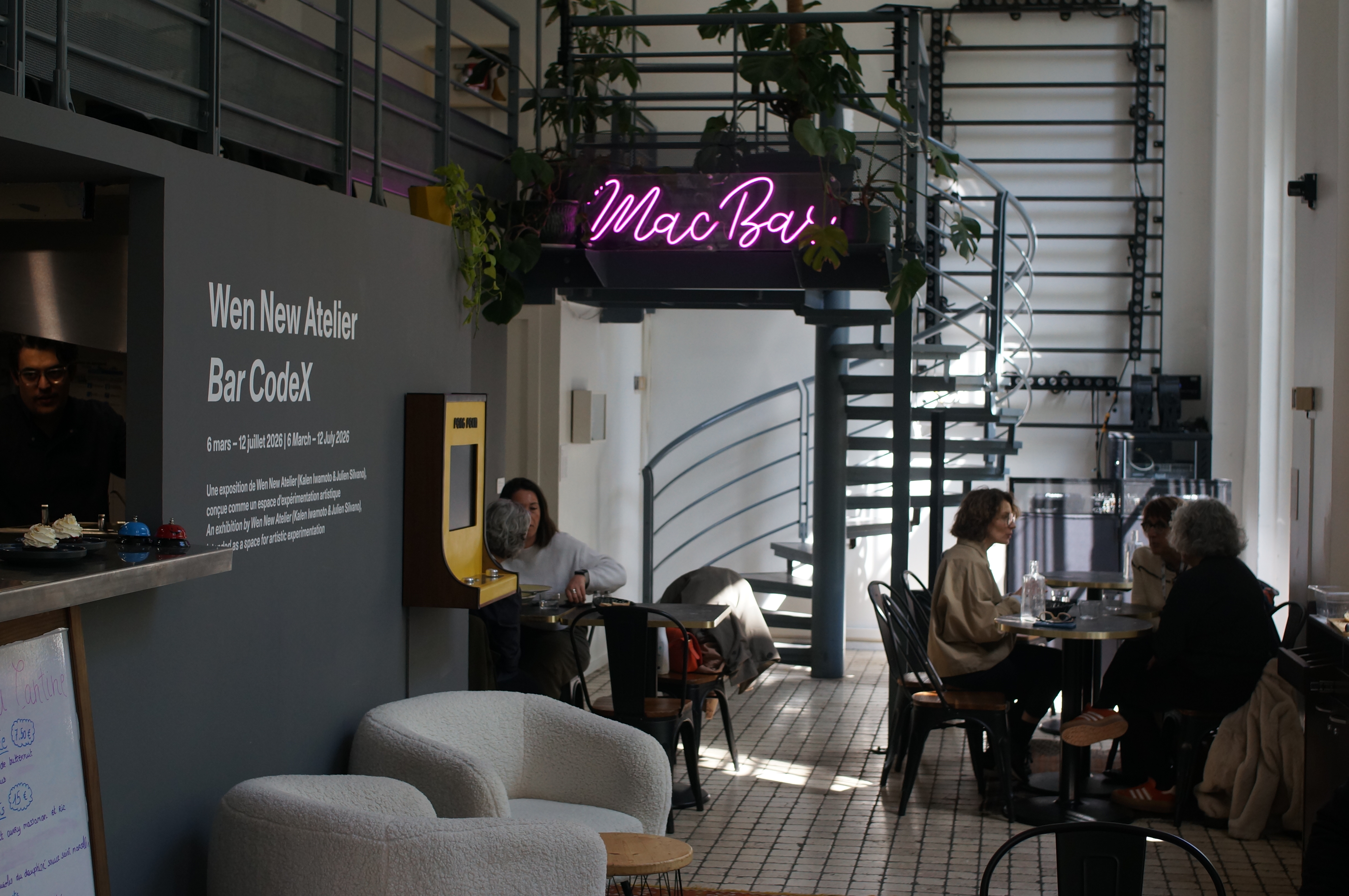
Presented at the macBAR, this research finds a particularly appropriate environment. Conceived as a space of circulation and encounter, this area escapes the traditional codes of the exhibition room. One enters, passes through, pauses. Wen New Atelier transforms it into an open studio, where artworks are discovered through movement and exchange. Text leaves the page and enters space. It becomes material, game, and conversation.
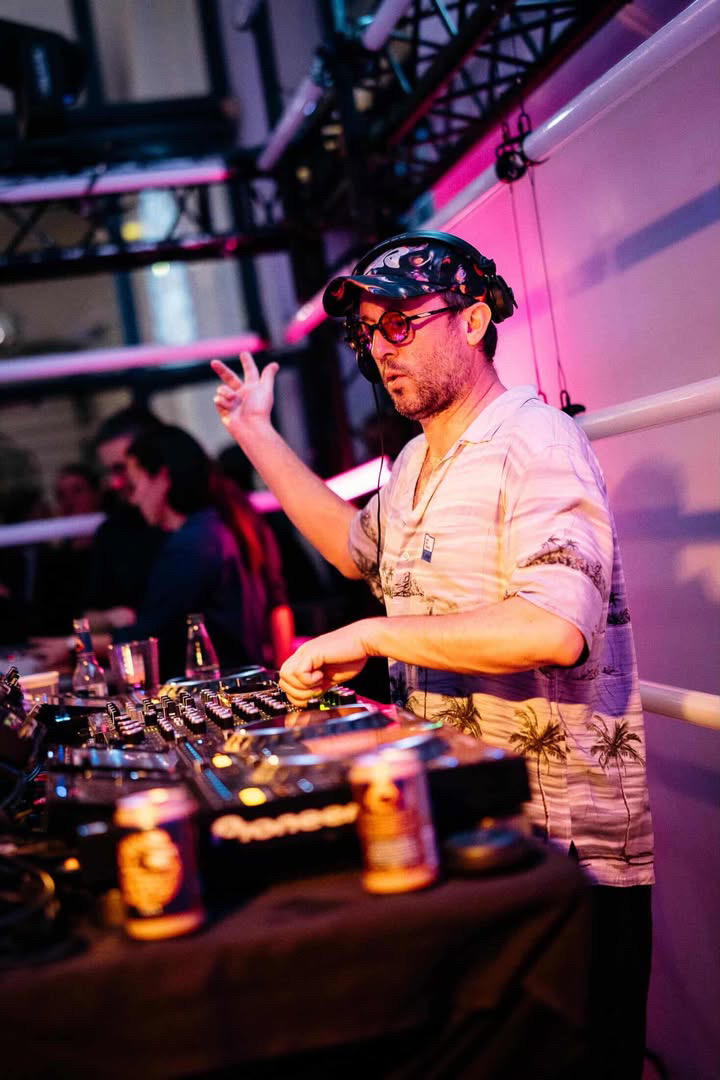
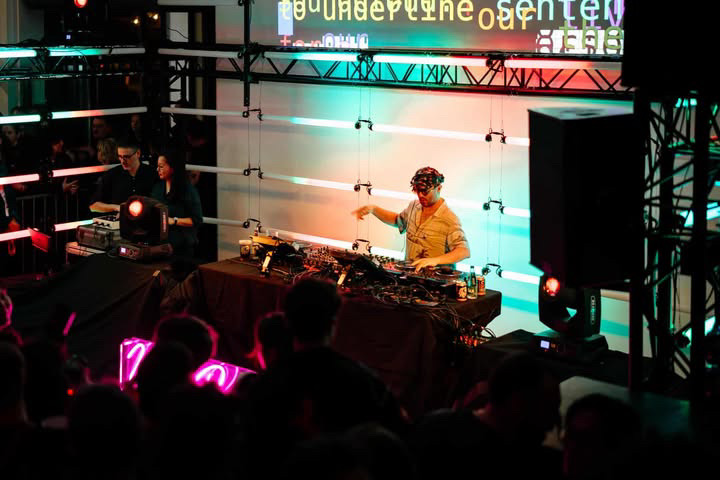
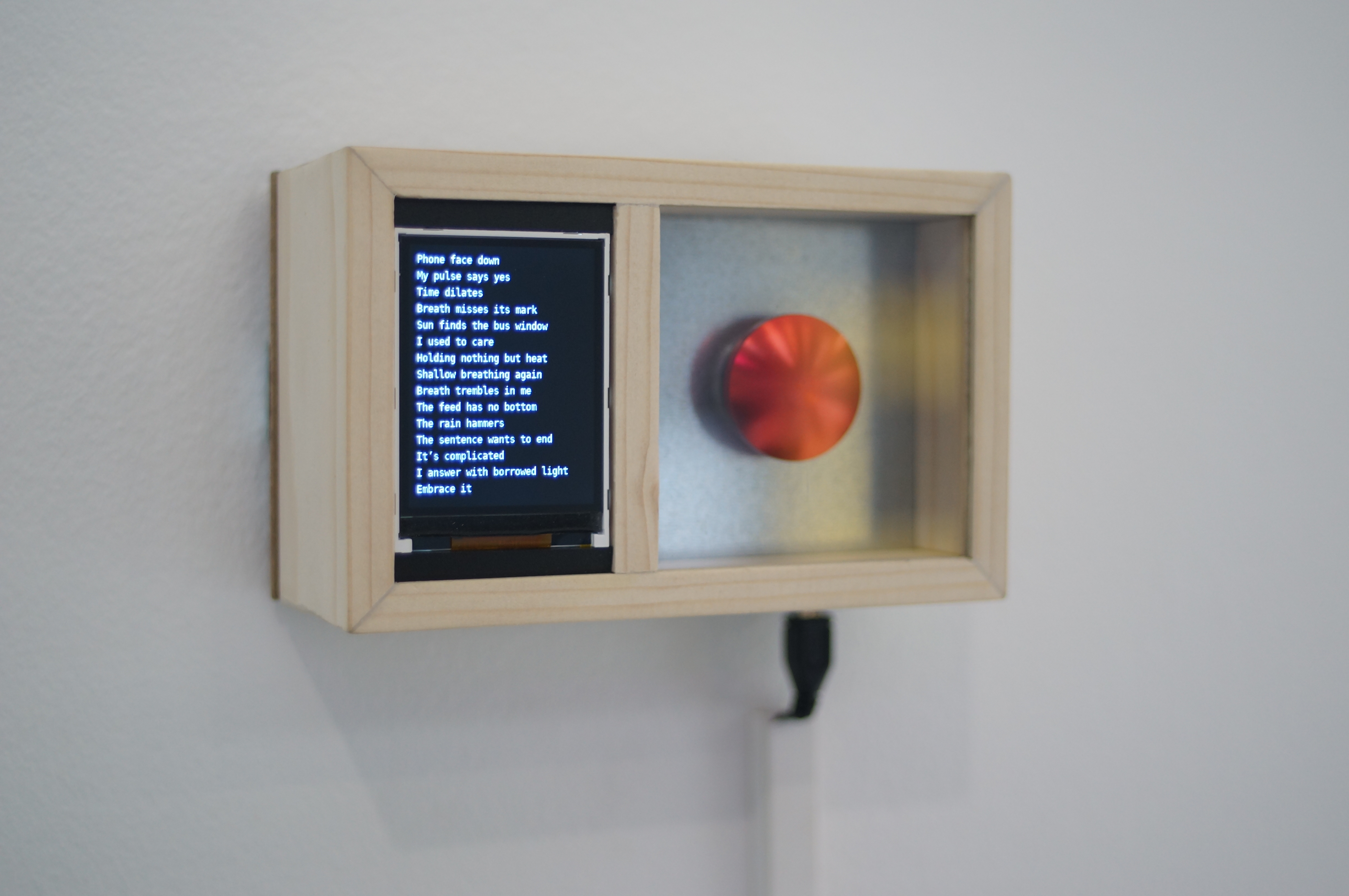
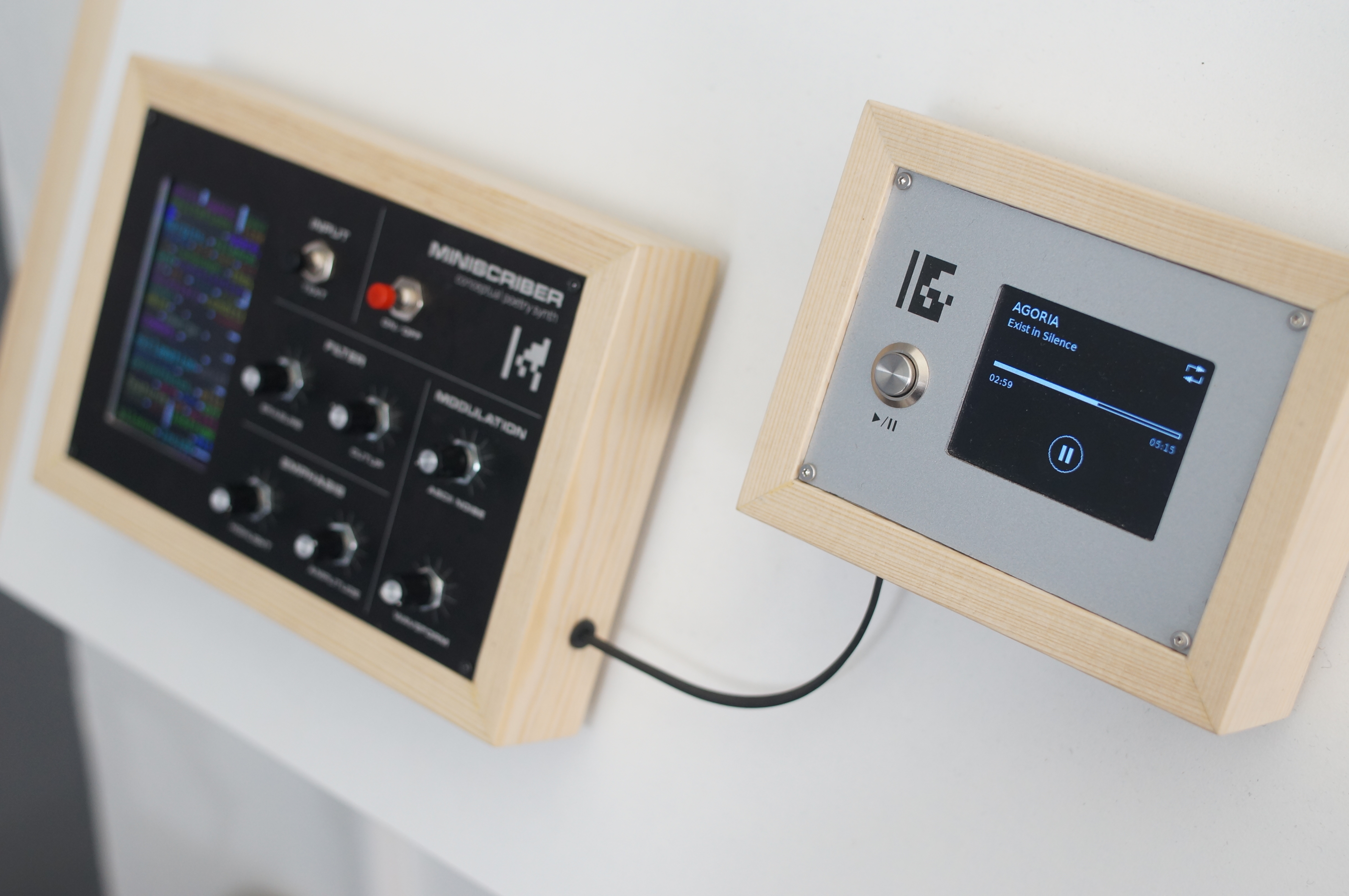
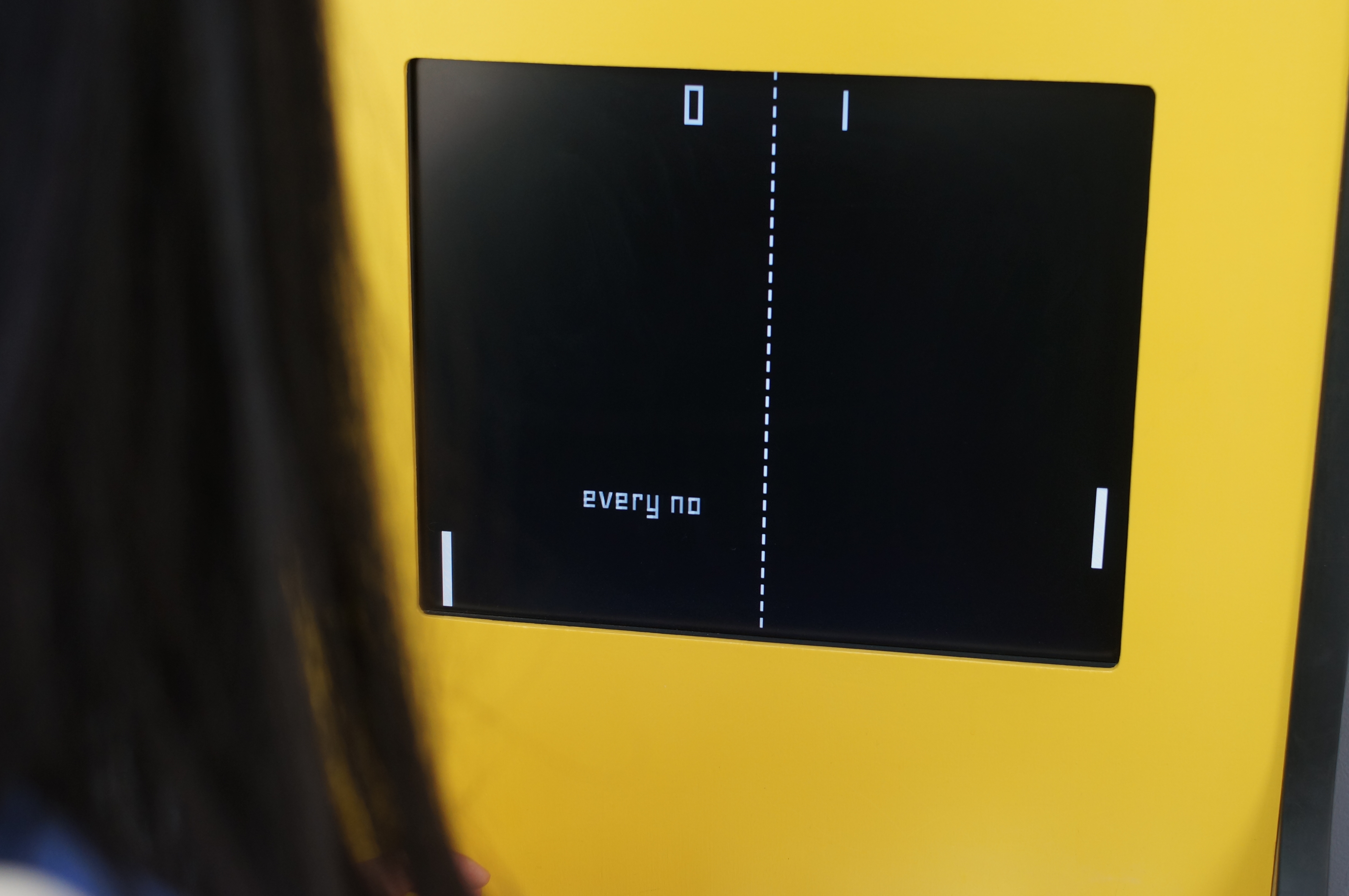
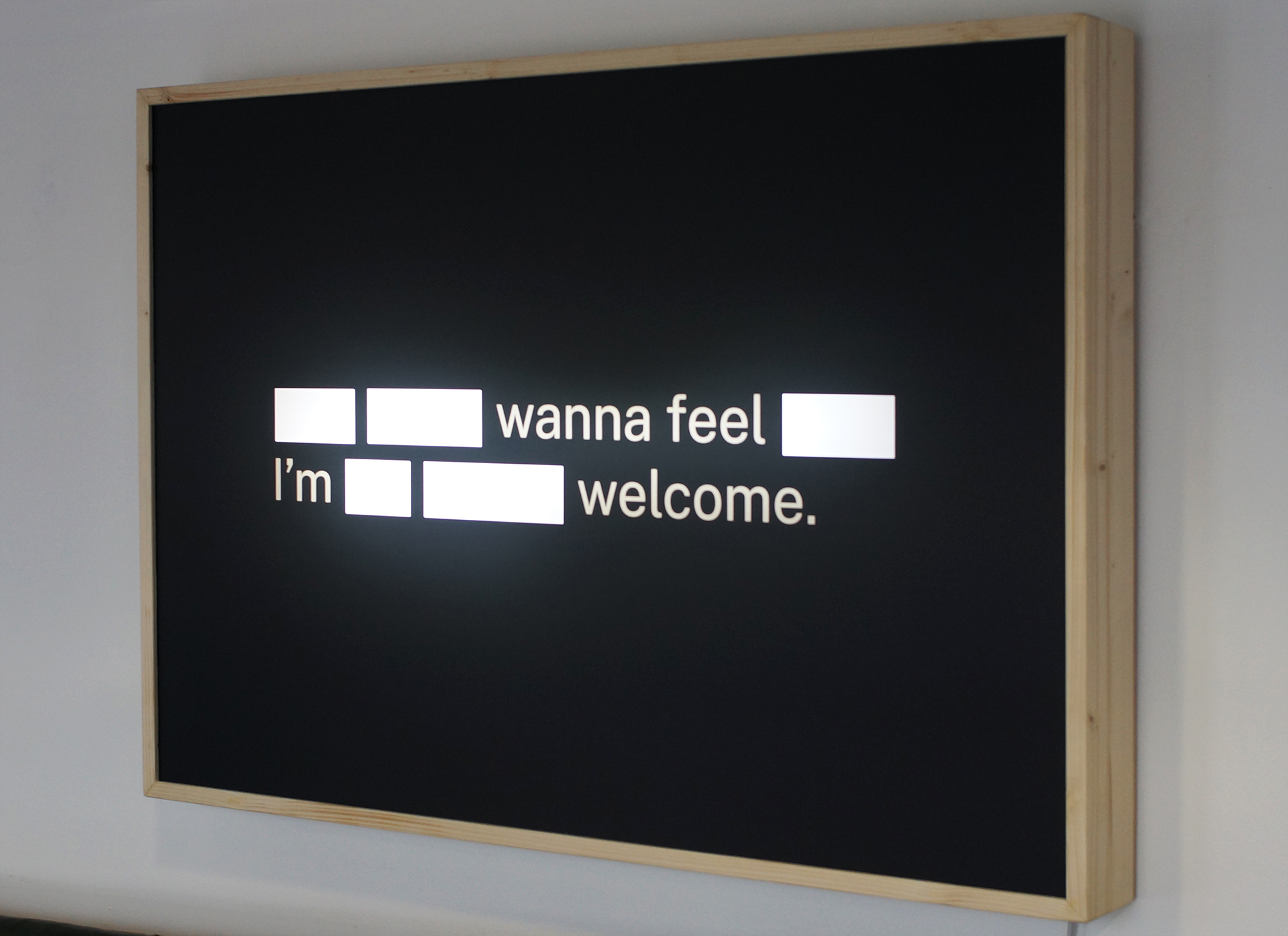
Pong Poem reappropriates one of the earliest video games, transforming each exchange into an act of writing. Words bounce, shift, and compose ephemeral poems. With Romeo & Juliape, written in dialogue with artificial intelligence, the figure of the author becomes fragmented. Writing becomes a shared territory between human intention and algorithmic calculation. In the Erasure Bar series, erasure creates as much as it removes. Disappearance reveals new possibilities of reading. The collaboration with Agoria on the Miniscriber Duo extends this exploration by allowing language to circulate between sound, rhythm, and performance.
None of these works delivers a message. They propose situations. They require a gesture, a decision, sometimes even hesitation. The visitor does not encounter a completed form; they directly participate in its activation. Each interaction inscribes the artwork within a renewed present.
In a world saturated with images and words, this openness becomes a form of resistance. Play momentarily suspends the continuous flow of information. It restores time to perception, depth to language, and space to unpredictability. The systems that govern our daily lives then appear in a different light. They cease to be unquestioned realities and become constructions that can be observed, manipulated, and sometimes subverted.
Everything is at stake within this suspended space where rules can be reinvented, where chance finds its place, and where the impossible becomes a possibility. A moment in which the artwork comes into being again, together with the one who encounters it.